





EDMONTON — A dramatic new snapshot of Canada’s labour market is turning heads across the country, highlighting Alberta’s outsized role in national job creation amid uneven economic performance elsewhere.
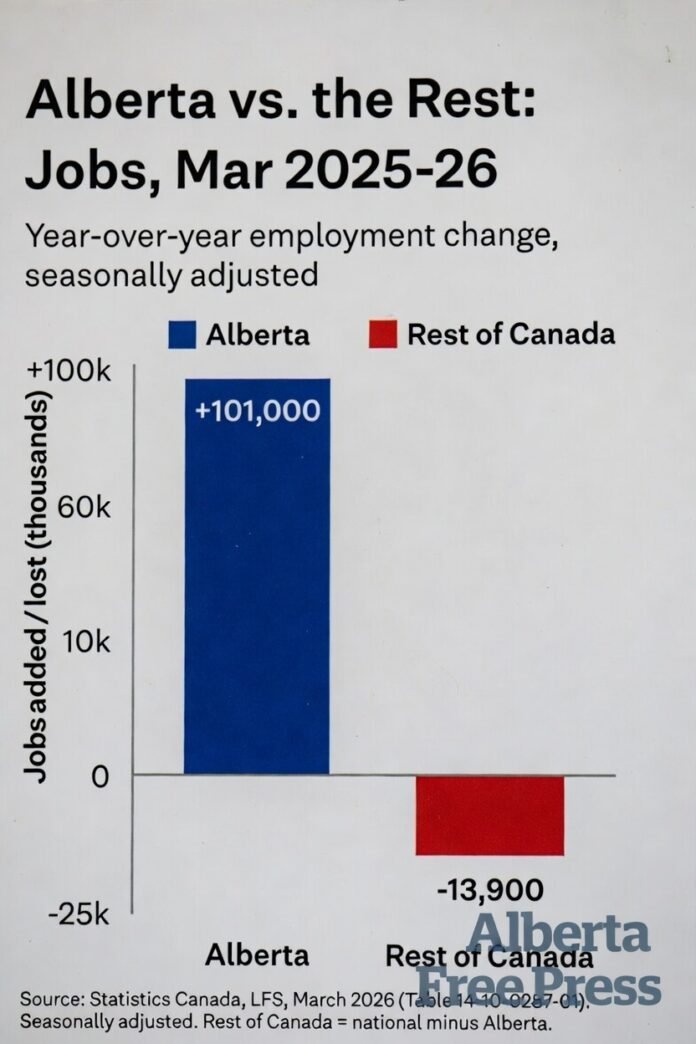
According to Statistics Canada’s Labour Force Survey for the period covering March 2025–26, Alberta added a remarkable 101,000 jobs on a year-over-year basis. In sharp contrast, the rest of Canada (calculated as the national total minus Alberta) saw a net loss of 13,900 positions.
Alberta’s strong performance stands out against a backdrop of more modest — or in this case negative when isolated — results in other provinces. The province has benefited from growth in key sectors such as energy, construction, and professional services, along with steady population inflows.
Nationally, Canada’s overall employment still edged higher by roughly 87,100 jobs year-over-year, meaning Alberta’s gains more than offset the softness seen elsewhere and helped keep the national figure in positive territory.
This regional contrast has sparked fresh discussion about economic policy differences across provinces, including approaches to taxation, regulation, and resource development. Alberta’s unemployment rate sat at 6.5% in the latest data, below the national average of 6.7%.
While some observers point to these numbers as evidence of Alberta’s economic resilience and potential for even stronger contributions if certain federal policies were adjusted, others emphasize the importance of national cohesion and shared economic strategies to support all regions.
The data underscores a broader truth: Canada’s economy is not moving in lockstep. Provincial differences in industry mix, demographics, and policy environments continue to shape divergent outcomes.
Economists note that year-over-year comparisons can fluctuate with seasonal adjustments and revisions, but the March 2026 release clearly shows Alberta leading the pack by a significant margin.
As policymakers in Ottawa and provincial capitals review these trends, the conversation is likely to focus on how best to foster balanced growth nationwide while recognizing the unique drivers behind Alberta’s recent success.
Source: Statistics Canada, Labour Force Survey (LFS), March 2026, Table 14-10-0287-01. Seasonally adjusted. Rest of Canada = national total minus Alberta. Alberta Labour Force Statistics highlights.