




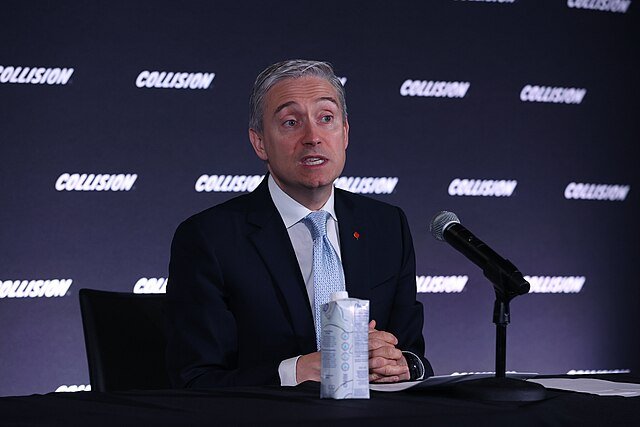
Ottawa – Anne-Marie Gaudet, the spouse of Finance Minister François-Philippe Champagne, serves as Vice-President of Environment at Alto, the federal Crown corporation responsible for developing Canada’s proposed high-speed rail line between Quebec City and Toronto.
According to public records and recent statements from Alto, Gaudet’s responsibilities include leading the organization’s environmental strategy, regulatory approvals, impact assessments, and sustainability efforts for the multi-billion-dollar infrastructure initiative. Alto has recently begun new phases of environmental field studies along the corridor, with Gaudet quoted in project updates emphasizing the centrality of environmental considerations.
Champagne, who previously held portfolios including Innovation, Science and Industry, was appointed Minister of Finance and National Revenue in 2025. As Finance Minister, he plays a central role in federal budgeting and fiscal decisions that can influence funding for large-scale Crown corporation projects, even though Alto reports primarily through the Minister of Transport.
Canada’s Conflict of Interest Act requires public office holders, including cabinet ministers, to arrange their private affairs to prevent real, potential, or apparent conflicts of interest. The Act explicitly extends to the private interests of a minister’s spouse or common-law partner. In this case, Gaudet’s senior executive position at Alto creates an apparent link between the minister’s public responsibilities and his family’s financial and professional interests in a project that depends heavily on continued federal support and approvals.
Public reaction has been swift and largely critical. Social media platforms and online forums have seen widespread discussion of the appointment, with many Canadians expressing frustration over what they see as another instance of potential insider influence in government-related initiatives. Critics argue the arrangement undermines public confidence in the impartiality of decision-making around taxpayer-funded infrastructure projects.
This development arrives against a backdrop of repeated ethics controversies during the years of Liberal governance under Justin Trudeau and into the current administration. Past high-profile cases have included the SNC-Lavalin affair, the WE Charity controversy, the Aga Khan vacation, and questions around procurement processes such as ArriveCan. In each instance, concerns centered on perceived overlaps between private interests and public duties, often leading to investigations by the Conflict of Interest and Ethics Commissioner.
Many Canadians, already grappling with economic pressures including housing affordability, inflation, and concerns over government spending, have voiced growing impatience with situations that appear to blur the lines between family connections and federal projects. Online commentary frequently frames the Alto appointment as emblematic of a broader pattern that erodes trust in Ottawa’s ability to manage large public initiatives without favoritism.
The Prime Minister’s Office and the minister’s office have not yet issued detailed public responses to the specific questions raised about potential conflict management measures, such as disclosure to the Ethics Commissioner or recusal from related cabinet discussions.
Ethics experts note that while having a spouse in a related role does not automatically constitute a violation, it typically requires proactive steps—including formal disclosure and screening arrangements—to avoid any appearance of impropriety. Whether such measures were implemented in this case remains unclear.
As the high-speed rail project advances, with significant implications for federal budgets and regional development, the familial connection at the executive level continues to draw attention and fuel debate about accountability in public office. For many Canadians, the episode highlights ongoing challenges in maintaining clear separation between political roles and private interests at the highest levels of government.